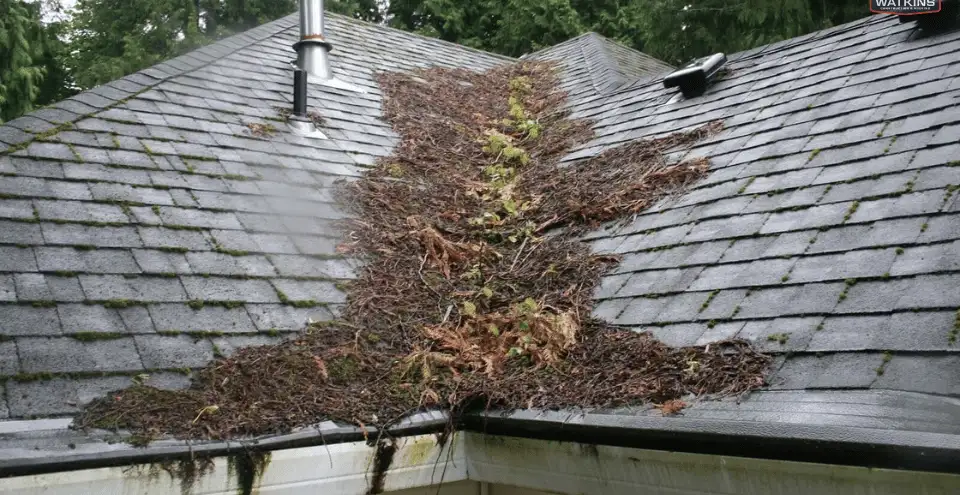
Why Roof Debris Removal Matters More Than Most Homeowners Realize
Roofing systems are built to move water away from your home or building. Shingles, flashing, underlayment, gutters, and downspouts all work together to keep moisture out. When debris interrupts that flow, water begins to linger in places it should not.
Leaves and organic material absorb and hold moisture. When they sit on shingles, especially in shaded areas, they slow drying time after rain. This constant dampness can wear down roofing materials, loosen granules, and create an environment where mold and algae grow.
Debris also migrates into valleys, around chimneys, near skylights, and along roof edges. These areas are already more vulnerable due to transitions and penetrations. When blocked by debris, water can back up under shingles or flashing, leading to leaks that are difficult to detect until interior damage appears.
Roof debris removal helps maintain proper drainage, reduces moisture exposure, and keeps roofing materials performing as intended.
How Moisture and Organic Buildup Damage Roofing Materials
Organic debris does more than just sit on the surface. As leaves and branches break down, they release acids and compounds that can slowly degrade roofing materials. Asphalt shingles are particularly vulnerable to prolonged moisture exposure, which can cause curling, cracking, and granule loss.
Moisture trapped under debris can also impact the roof deck beneath the shingles. Over time, this can lead to wood rot, weakened structural components, and fastener failure. Once rot begins, repairs become more invasive and costly.
In colder months, wet debris increases the risk of ice dams. When debris blocks drainage paths, melting snow refreezes near the roof edge, forcing water back under shingles. This cycle can cause widespread damage to both roofing and interior finishes.
Regular roof debris removal helps prevent these moisture-related issues before they take hold.
How to Get Leaves Off Roof Without Causing Damage
Many homeowners ask how to get leaves off roof surfaces safely, especially when debris becomes visible from the ground. While it may be tempting to grab a ladder and start clearing debris, improper techniques can cause more harm than good.
Walking on the roof without proper training can crack shingles or loosen fasteners. Using stiff rakes or pressure washers can strip protective granules or lift shingle edges, creating new entry points for water.
If you attempt light debris removal, use soft tools designed for roofing surfaces and avoid working during wet or icy conditions. Always maintain proper ladder safety and avoid stepping directly on shingle edges or valleys.
That said, even careful DIY efforts have limits. Professional roof debris removal uses controlled techniques that protect roofing materials while fully clearing problem areas that homeowners often miss.
Remove Leaves From Roof Areas That Trap Water
Leaves tend to collect in specific areas where roof design and airflow allow buildup. Valleys, low-slope sections, behind chimneys, and near dormers are common trouble spots. When leaves collect in these areas, they act like a dam, slowing water movement and increasing saturation.
Removing leaves from roof surfaces is especially important in these zones. If debris is left in valleys, water can pool and seep under shingles. Around chimneys and vents, debris can interfere with flashing, leading to leaks at the seams.
Gutters also play a critical role. When leaves fall from the roof into gutters, they block downspouts and cause water to overflow. This overflow can damage fascia boards, siding, foundations, and landscaping.
Roof debris removal should always include clearing gutters and checking that water flows freely away from the structure.
Benefits of Roof Cleaning Beyond Appearance
The benefits of roof cleaning extend far beyond visual appeal. While a clean roof certainly improves curb appeal, the functional advantages are far more important.
A clean roof dries faster after rain, reducing moisture exposure. It allows shingles to perform properly and helps prevent algae and mold growth. Roof cleaning also makes it easier to spot early signs of wear, such as lifted shingles, flashing gaps, or damaged areas.
By addressing debris and buildup early, roof cleaning supports longer service life and helps delay full replacement. It also protects related systems, including gutters, siding, and insulation, from water damage caused by poor drainage.
When paired with professional inspections, roof debris removal and cleaning provide valuable insight into the condition of your roofing system.
Roof Cleaning Tips Homeowners Should Keep in Mind
Effective roof debris removal starts with smart cleaning habits that protect both your safety and your roofing materials. Knowing what to do and what to avoid helps prevent unnecessary damage while keeping moisture, leaves, and organic buildup from creating bigger problems over time.
Here are some tips to keep in mind:
- Focus on Safety and Material Protection: Use gentle methods that protect shingles and roofing components while reducing the risk of slips or falls.
- Avoid High-Pressure Washing: Pressure washing asphalt shingles can strip protective granules and weaken the roof surface.
- Skip Harsh Cleaning Chemicals: Strong chemicals may damage shingles, flashing, and surrounding landscaping.
- Clean During Dry Conditions: Dry weather allows debris to be removed without spreading moisture across the roof.
- Plan Seasonal Cleanings: Clearing debris after heavy leaf drop or storms helps prevent buildup from becoming compacted.
- Recognize DIY Limitations: When debris is tightly packed, widespread, or hard to reach, stopping DIY work helps avoid accidental damage.
- Use Professional Roof Debris Removal When Needed: Professional services combine proper tools, experience, and safety practices to deliver thorough results without harming roofing materials.
Why Gutter Blockages Are Closely Linked to Roof Debris
Roof debris and gutter blockages go hand in hand. Leaves and organic material often start on the roof and end up in the gutter system. When gutters are clogged, water has nowhere to go.
Overflowing gutters allow water to run down exterior walls, soak fascia boards, and pool near foundations. Over time, this can cause wood rot, erosion, and basement moisture issues. In colder climates, clogged gutters contribute to ice dams and roof edge damage.
Roof debris removal helps prevent gutter blockages by stopping debris before it enters the system. Regular clearing of roof surfaces reduces the volume of material that reaches gutters, making maintenance easier and more effective.
Storms, Trees, and the Need for Ongoing Roof Debris Removal
Storms can rapidly increase the amount of debris on a roof. High winds break branches, knock leaves loose, and scatter organic material across roofing surfaces. Even a single storm can undo months of natural shedding patterns.
After storms, roof debris removal becomes especially important. Wet debris left behind creates prolonged moisture exposure and increases the chance of hidden damage. Storm debris may also conceal cracked shingles or displaced flashing that need attention.
Professional inspections combined with debris removal help ensure that storm-related issues are identified early. This proactive approach can prevent minor damage from turning into major repair projects.
How Professional Roof Debris Removal Protects Roofing Systems
Professional roof debris removal is about more than clearing leaves. It involves understanding roofing materials, drainage patterns, and vulnerable areas. Trained crews know where debris causes the most harm and how to remove it without disturbing the roof system.
Professionals use soft tools, controlled techniques, and safety equipment to protect both the roof and the property. They also check for signs of wear or damage while removing debris, providing valuable insight into roof condition.
This approach reduces risk for homeowners and helps preserve roofing warranties that may be voided by improper cleaning methods. Professional services also save time and eliminate the hazards associated with climbing ladders or walking on roofs.
Long-Term Cost Savings From Consistent Roof Debris Removal
Ignoring debris may seem like a way to save money in the short term, but it often leads to higher costs later. Moisture damage, wood rot, insulation issues, and interior repairs add up quickly.
Consistent roof debris removal helps avoid these expenses by addressing the root cause of many roofing problems. It supports proper drainage, protects materials, and reduces the likelihood of emergency repairs.
Over the life of a roof, routine maintenance costs are far lower than the cost of premature replacement or extensive repairs caused by neglect.
How Capital City Contractors, LLC Can Help
We provide professional roof debris removal as part of our broader roofing services, helping homeowners and business owners protect their properties from moisture damage and gutter blockages. As a family-owned company led by hands-on oversight, we take the time to remove debris safely, inspect critical areas, and keep roofing materials in good condition.
Clients trust our team because we communicate clearly, show up when we say we will, and treat every roof like it is our own. With experience serving Hyattsville, MD, and the surrounding DMV and DelMarVA regions, we deliver dependable service that supports long-term roof performance and helps prevent costly repairs.